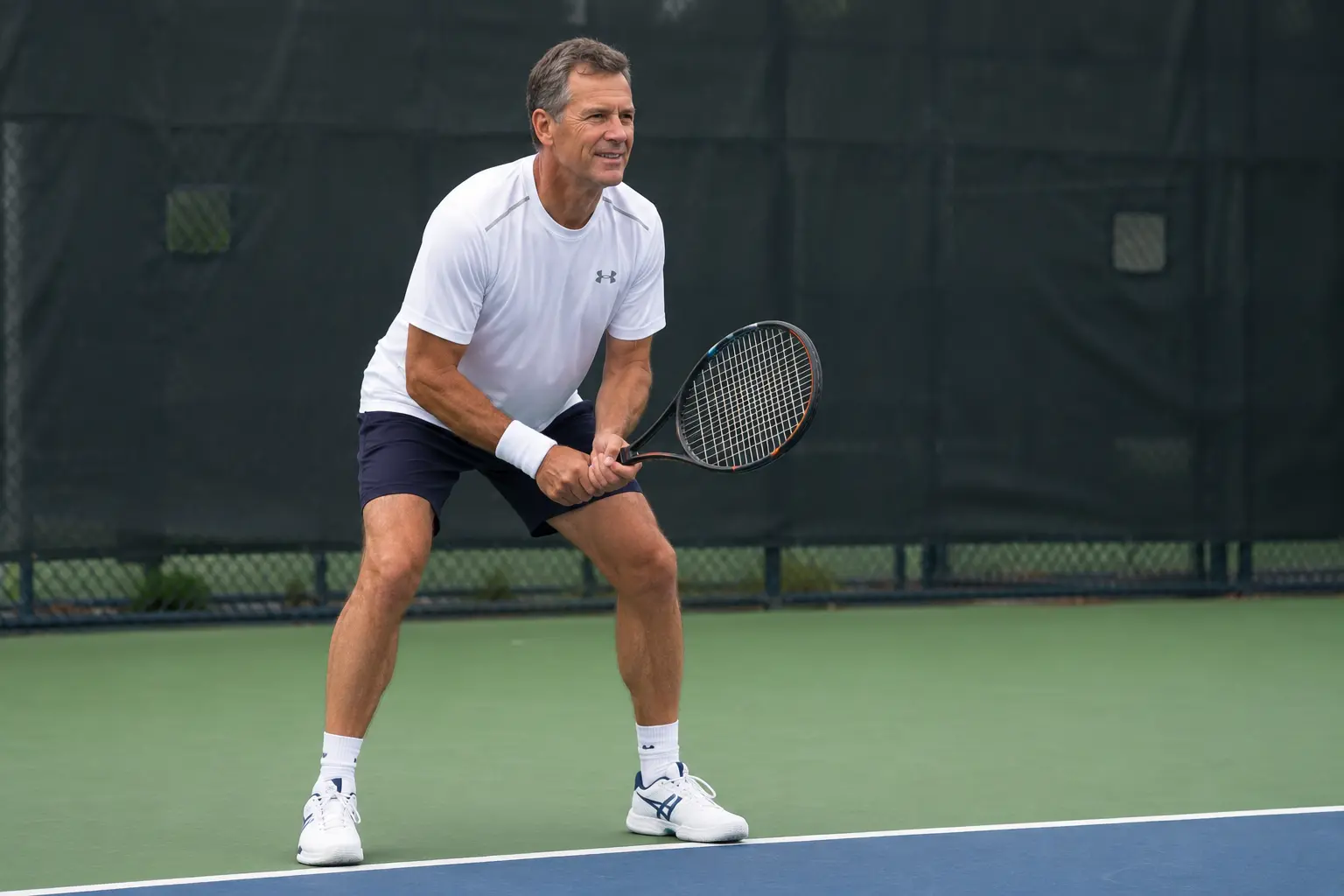
As we get older, staying active becomes less about chasing athletic performance and more about protecting our health, mobility, independence, and quality of life. Many men aged 60 and over know they should exercise more, but finding an activity that is both enjoyable and sustainable can be difficult.
There are many forms of exercise you can do for good health. Walking is excellent. Strength training is valuable. Cycling and swimming certainly are worthwhile.
Tennis is another one to consider: it combines cardiovascular fitness, strength, coordination, balance, mental sharpness, and social connection into one engaging activity. Research finds tennis offers a wide range of health benefits that few other activities offer.Â
What’s more, playing tennis rarely feels like a chore. When we enjoy exercise, we are far more likely to keep doing it consistently — and consistency is what truly improves long-term health.
If you are looking for an activity that can help you stay strong, active, and mentally sharp well into your later years, tennis is worth a close look.
Table of Contents
Tennis Is One of the Best Workouts for Your Heart
Heart health is crucial for men aged 60 and over. Regular physical activity can help lower blood pressure, improve circulation, reduce cholesterol levels, and decrease the risk of cardiovascular disease.
Tennis is especially effective because it naturally combines aerobic exercise with short bursts of higher-intensity movement. During a match, you walk, jog, pivot, stretch, and react continually. This type of interval-style movement challenges your cardiovascular system in a healthy way without requiring nonstop intense exertion.
Research highlighted by Harvard Health found that people who regularly played racket sports had significantly lower risks of cardiovascular disease and overall mortality compared with inactive individuals.
The encouraging part is that you do not need to play high-level competitive tennis to experience these benefits. Doubles matches, recreational rallies, and shorter sessions can still provide meaningful cardiovascular exercise while placing less strain on the body.
For many of us, that balance between challenge and sustainability is exactly what we need.
Tennis Helps Maintain Strength and Mobility
One of the biggest physical challenges we face after 60 is the gradual loss of muscle mass, flexibility, and bone density. These changes can affect balance, posture, coordination, and overall mobility.
Tennis helps counter many of these issues because it is a full-body, weight-bearing activity. Every time you move across the court, rotate your torso, or swing the racket, you are engaging muscles throughout the body.
Unlike some repetitive forms of exercise, tennis trains us to move in multiple directions. We shuffle sideways, change direction quickly, reach overhead, and react dynamically. Those movements strengthen muscles that are essential for maintaining balance and preventing falls.
Research published in the British Journal of Sports Medicine linked tennis participation with improved musculoskeletal health and stronger bones.
Another study examining long-term tennis participation found that regular play was associated with better balance, stronger bone density, and improved quality of life later in life.
The practical benefits matter. When we maintain strength and coordination, everyday activities become easier — climbing stairs, carrying groceries, gardening, traveling, or simply getting up from a chair without difficulty.
Tennis Keeps Your Mind Engaged
Physical fitness is only part of healthy aging. Mental sharpness and emotional well-being are just as important.
One reason tennis stands out is that it challenges the brain as much as the body. Every point requires concentration, anticipation, strategy, timing, and decision-making. We constantly process information: where the ball is going, how our opponent is positioned, and how we should respond.
That combination of physical and mental engagement may help support cognitive health as we age.
Harvard Health notes that racket sports improve coordination while also challenging planning and reaction skills.
There is also the social aspect. Many men become less socially active after retirement, which can contribute to isolation and declining mental health. Tennis naturally encourages interaction. Whether we play doubles, join a local club, or participate in community leagues, the game creates opportunities to connect with others regularly.
Those social connections are not just enjoyable — they are important for long-term well-being.
Tennis May Even Help You Live Longer
One of the most remarkable findings from recent sports medicine research is the strong connection between racket sports and longevity.
Several large observational studies suggest that tennis and other exercises are associated with some of the greatest reductions in mortality risk among recreational activities.
Research discussed by Harvard Health found that tennis players experienced significantly lower overall mortality rates compared with sedentary individuals.
More recent research involving men later in life also found that activities such as tennis, cycling, and swimming were linked to lower mortality risk.
Of course, no single sport guarantees a longer life. But tennis combines many of the factors consistently associated with healthy aging:
* Cardiovascular exercise
* Strength and mobility training
* Cognitive stimulation
* Stress reduction
* Social interaction
* Long-term enjoyment and adherence
Very few forms of exercise offer all of these benefits simultaneously.
You Do Not Need to Be an Athlete to Start
Many men aged 60 and over hesitate to try tennis because they assume it requires elite fitness or years of experience. In reality, recreational tennis is highly adaptable.
You can start gradually and tailor the game to your physical condition:
* Play doubles instead of singles
* Use shorter playing sessions
* Focus on rallying rather than competition
* Take beginner lessons designed for seniors
* Play at a slower pace with frequent breaks
Modern tennis programs increasingly cater to players later in life, including those who are completely new to the sport.
The goal is not perfection. The goal is movement, enjoyment, and consistency.
Other Racket Sports With Similar Benefits
Not a tennis guy? That’s okay – several other sports provide many of the same physical and mental advantages while being easier on the joints:
Pickleball
Pickleball has become enormously popular among men and women aged 60 and over because it is social, accessible, and lower impact than tennis.
The court is smaller, the pace is manageable for beginners, and the movements are generally less demanding on the knees and hips. Yet pickleball still provides excellent cardiovascular exercise, coordination training, and mental stimulation.
Health experts report that pickleball can improve heart health, flexibility, balance, and emotional well-being.
For many of us, pickleball can serve as either an introduction to racket sports or a long-term alternative to tennis.
Table Tennis
Table tennis is another excellent choice, especially if you want a lower-impact activity that still challenges both mind and body.
Although it may appear less physically demanding, table tennis requires quick reflexes, hand-eye coordination, concentration, and balance. Competitive rallies can also elevate heart rate surprisingly effectively.
A randomized controlled trial involving men later in life found that six months of table tennis training improved body composition, bone health, and physical performance.
Because it can be played indoors year-round, table tennis is particularly convenient during hot summers or colder weather.
Badminton
Badminton deserves more respect than it often receives. It provides fast-paced cardiovascular exercise along with rapid directional changes and coordination demands similar to tennis.
Like other racket sports, badminton also trains reaction time, balance, and strategic thinking.
Harvard Health includes badminton among the racket sports associated with strong cardiovascular and longevity benefits.
Starting Safely Matters
Before beginning tennis or any new exercise routine, it is wise to speak with your healthcare provider, particularly if you have heart disease, arthritis, joint problems, or other chronic conditions.
A few simple habits can make playing safer and more enjoyable:
* Warm up before every session
* Wear supportive court shoes
* Start slowly and increase gradually
* Stay hydrated
* Focus on consistency rather than intensity
* Include stretching and strength exercises alongside play
Most injuries happen when we try to do too much too soon. A gradual approach allows the body to adapt safely.
The Real Value of Tennis
When you’ve attained this stage of life, exercise is not about proving anything. It is about maintaining the freedom to live well for as long as possible.
Tennis offers a rare combination of physical activity, mental engagement, and social connection that can help us stay healthier and more active as we age. It challenges the body without requiring extreme athleticism, and it encourages us to keep moving because the game itself is enjoyable.
Whether you choose tennis, pickleball, badminton, or table tennis, racket sports can become more than just exercise. They can become part of a healthier, more connected, and more energetic lifestyle.
And that may be one of the best investments we can make in our future selves.